
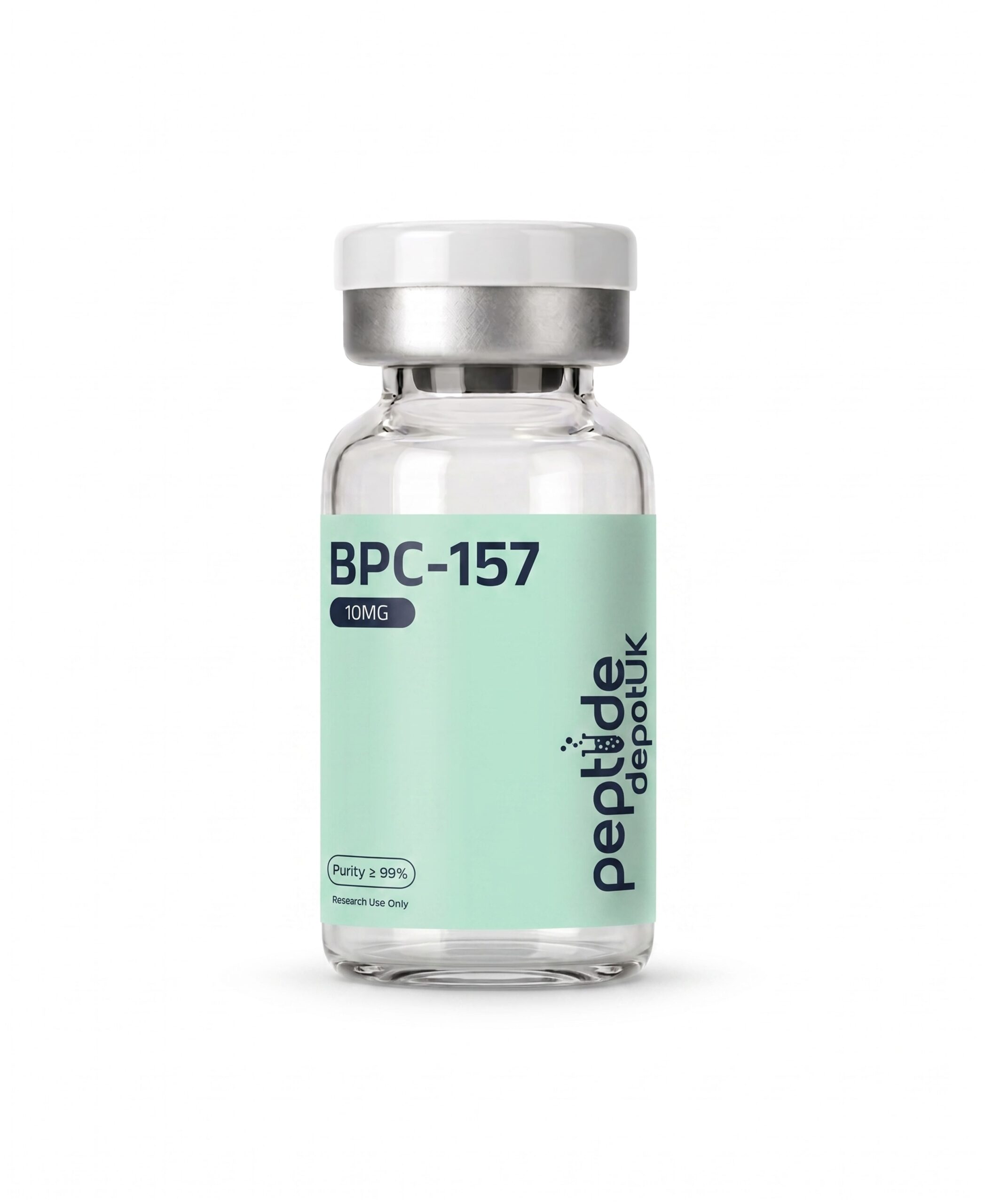






Description
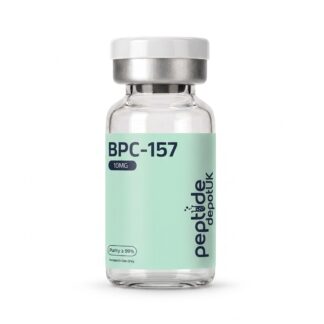
BPC-157 (Body Protection Compound-157)
Few peptides have accumulated the volume of preclinical evidence BPC-157 has. Derived from a protein sequence naturally present in gastric juice, this synthetic 15-amino acid peptide now sits behind more than 500 published studies spanning a wide range of tissue and organ models, making it one of the most heavily researched regenerative peptides in the field (Vasireddi et al., 2025).
How it works
The best-documented mechanism runs through VEGFR2, a receptor that triggers new blood vessel formation, paired with the Akt-eNOS pathway, which generates nitric oxide to support vascular repair and restore blood flow to damaged tissue (Rodgers et al., 2025). A second pathway, ERK1/2 signalling, governs cell survival and fibroblast activity, and appears especially relevant in tissue that’s naturally poor in blood supply, tendons and ligament junctions being the clearest examples (Rodgers et al., 2025). On top of the repair signalling, BPC-157 also suppresses key inflammatory molecules and shows cytoprotective effects on endothelial and epithelial cells (Jozwiak et al., 2025).
What the evidence shows
- Consistency across studies: a systematic review spanning 36 studies from 1993 to 2024 found reliable evidence of structural and functional recovery across tendon, ligament, muscle, and bone injury models, with no adverse effects reported at any dose tested, a notably clean safety signal given the study volume (Vasireddi et al., 2025)
- A specific mechanism in tendon repair: preclinical work found BPC-157 upregulates growth hormone receptor expression in tendon fibroblasts specifically, pointing to a plausible pathway for its effects on connective tissue (Chang et al., 2018)
- Reach beyond the musculoskeletal system: research has extended into the gut, liver, and cardiovascular system, suggesting the cytoprotective activity isn’t confined to one tissue type but reflects a broader mechanism (Jozwiak et al., 2025)
For research use only. Not intended for use in humans or animals.
References
Chang, C. H., Tsai, W. C., Hsu, Y. H., & Pang, J. H. (2018). https://pmc.ncbi.nlm.nih.gov/articles/PMC6271067/
Jozwiak, P., Lipinska, A., & Zielinska, W. (2025). https://pubmed.ncbi.nlm.nih.gov/40005999/
Rodgers, K. E., Jamieson, S., Campeau, J. D., & Vinters, H. V. (2025). https://pmc.ncbi.nlm.nih.gov/articles/PMC12446177/
Vasireddi, N., Hahamyan, H., Salata, M. J., Karns, M., Calcei, J. G., Voos, J. E., & Apostolakos, J. M. (2025). https://pmc.ncbi.nlm.nih.gov/articles/PMC12313605/