








Description
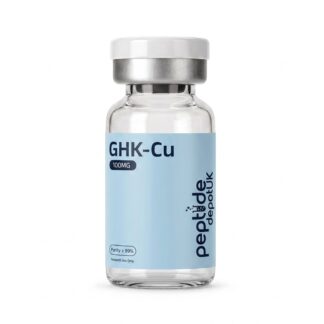
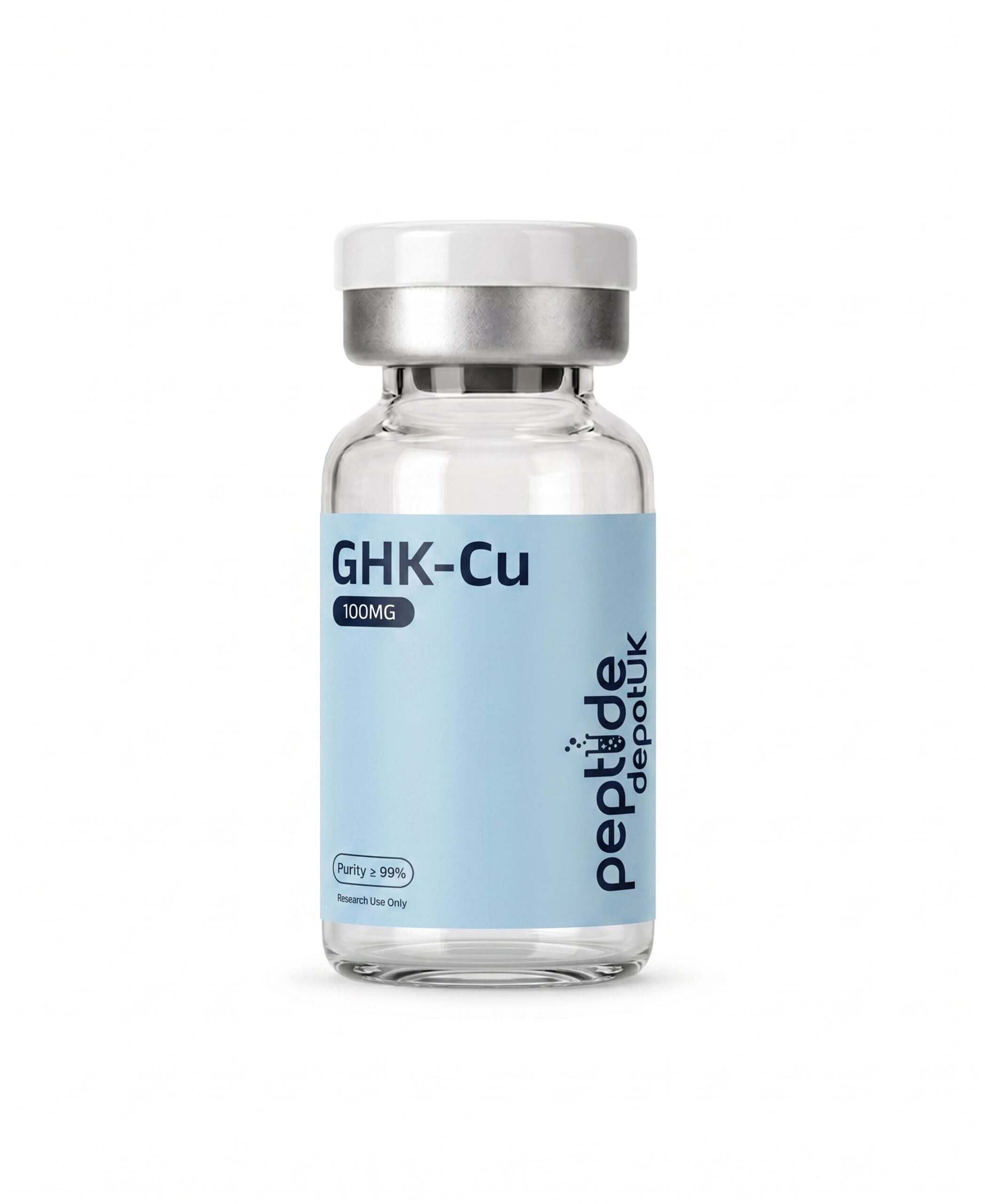
GHK-Cu (Copper Peptide)
GHK-Cu is a naturally occurring tripeptide — glycyl-L-histidyl-L-lysine — complexed with copper(II). First isolated from human plasma albumin in 1973, it is found naturally in plasma, saliva, and wound fluid, but its concentrations decline significantly with age. It has since become one of the most extensively studied peptides in tissue repair and regenerative research (Pickart & Margolina, 2018).
Mechanism of Action
- GHK-Cu works by attracting immune and repair cells to sites of tissue damage, stimulating fibroblasts — the cells responsible for building and maintaining connective tissue — to produce collagen, elastin, and structural proteins that form the scaffolding of healthy tissue (Maquart et al., 1988)
- It simultaneously regulates enzymes that break down old or damaged tissue while activating inhibitors of those same enzymes, allowing for controlled and balanced tissue remodelling (Pickart & Margolina, 2018)
- The copper component activates key enzymes involved in antioxidant defence, blood vessel formation, and connective tissue integrity (Errante et al., 2020)
Key Research Findings
- Collagen synthesis in cultured fibroblasts was shown to increase significantly with GHK-Cu at concentrations as low as 10⁻¹² mol/L, maximising at 10⁻⁹ mol/L — demonstrating potent biological activity at very small amounts (Maquart et al., 1988)
- Gene expression analysis revealed GHK-Cu modulates a broad range of biological pathways, with documented effects on wound healing genes, antioxidant responses, anti-inflammatory signalling, and DNA repair processes (Pickart & Margolina, 2018)
- Preclinical wound models demonstrated accelerated healing of diabetic and ischemic wounds, with reduced inflammatory markers and increased collagen deposition compared to controls (Gorski et al., 2020)
For research use only. Not intended for use in humans or animals.
References
Errante, F., Ledwoń, P., Latajka, R., Rovero, P., & Papini, A. M. (2020). https://pmc.ncbi.nlm.nih.gov/articles/PMC4508379/
Gorski, J., Prokopowicz, M., & Mielniczuk, M. (2020). https://pmc.ncbi.nlm.nih.gov/articles/PMC6073405/
Maquart, F. X., Pickart, L., Laurent, M., Gillery, P., Monboisse, J. C., & Borel, J. P. (1988). https://pubmed.ncbi.nlm.nih.gov/3169264/
Pickart, L., & Margolina, A. (2018). https://pmc.ncbi.nlm.nih.gov/articles/PMC3359723/