






Description
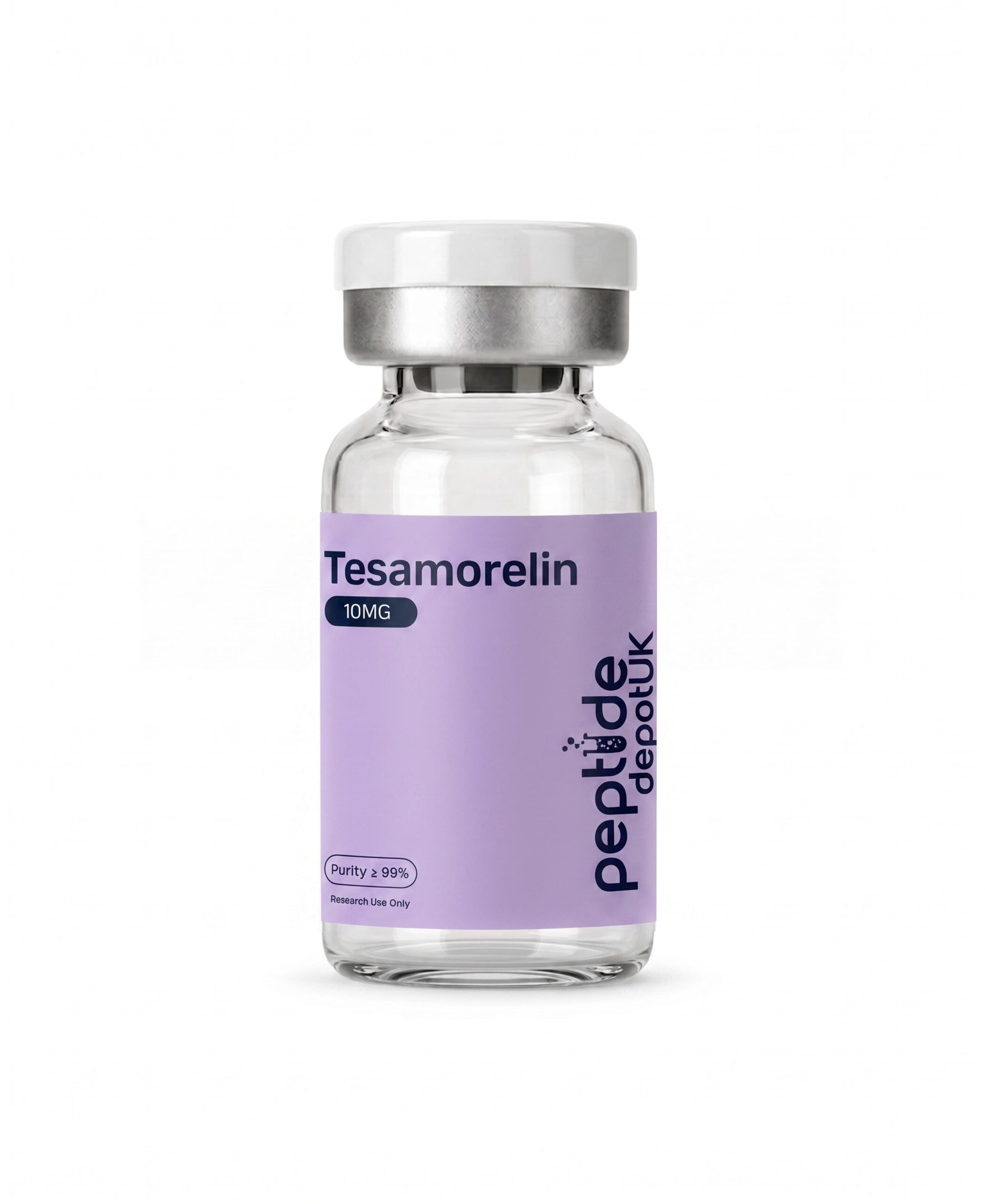
Tesamorelin
Tesamorelin is a modified analogue of GHRH, the brain’s natural signal telling the pituitary gland to release growth hormone. The modification protects it from the enzyme that would otherwise break down natural GHRH almost immediately in the bloodstream, extending its window of activity. Because it works upstream, stimulating the body’s own GH production rather than supplying GH directly, the natural feedback systems governing GH levels stay intact.
Key research findings
- In clinical trials involving subjects with HIV-associated fat redistribution, tesamorelin produced significant, CT-measured reductions in visceral abdominal fat, along with improved lipid profiles, compared to placebo across 26 to 52 week study periods (Falutz et al., 2010)
- Mechanistic studies traced these fat-reduction effects to GH-stimulated lipolysis, the direct breakdown of fat stored in adipose tissue, rather than fluid shifts, evidenced by a corresponding rise in free fatty acid release from fat cells (Stanley et al., 2014)
- Pharmacokinetic research found that tesamorelin’s N-terminal modification stretches its half-life from roughly 7 minutes (natural GHRH) to around 30 minutes, a substantial extension that’s central to its usefulness as a stable GHRH analogue in research (Stanley et al., 2014)
- Because tesamorelin acts at the pituitary level rather than replacing GH directly, research confirmed it preserves the body’s natural GH feedback loop, a meaningful distinction from direct GH administration in study models (Stanley et al., 2014)
For research use only. Not intended for use in humans or animals.
References
Falutz, J., et al. (2010). https://pubmed.ncbi.nlm.nih.gov/20393159/
Stanley, T. L., & Grinspoon, S. K. (2014). https://pubmed.ncbi.nlm.nih.gov/24423315/