
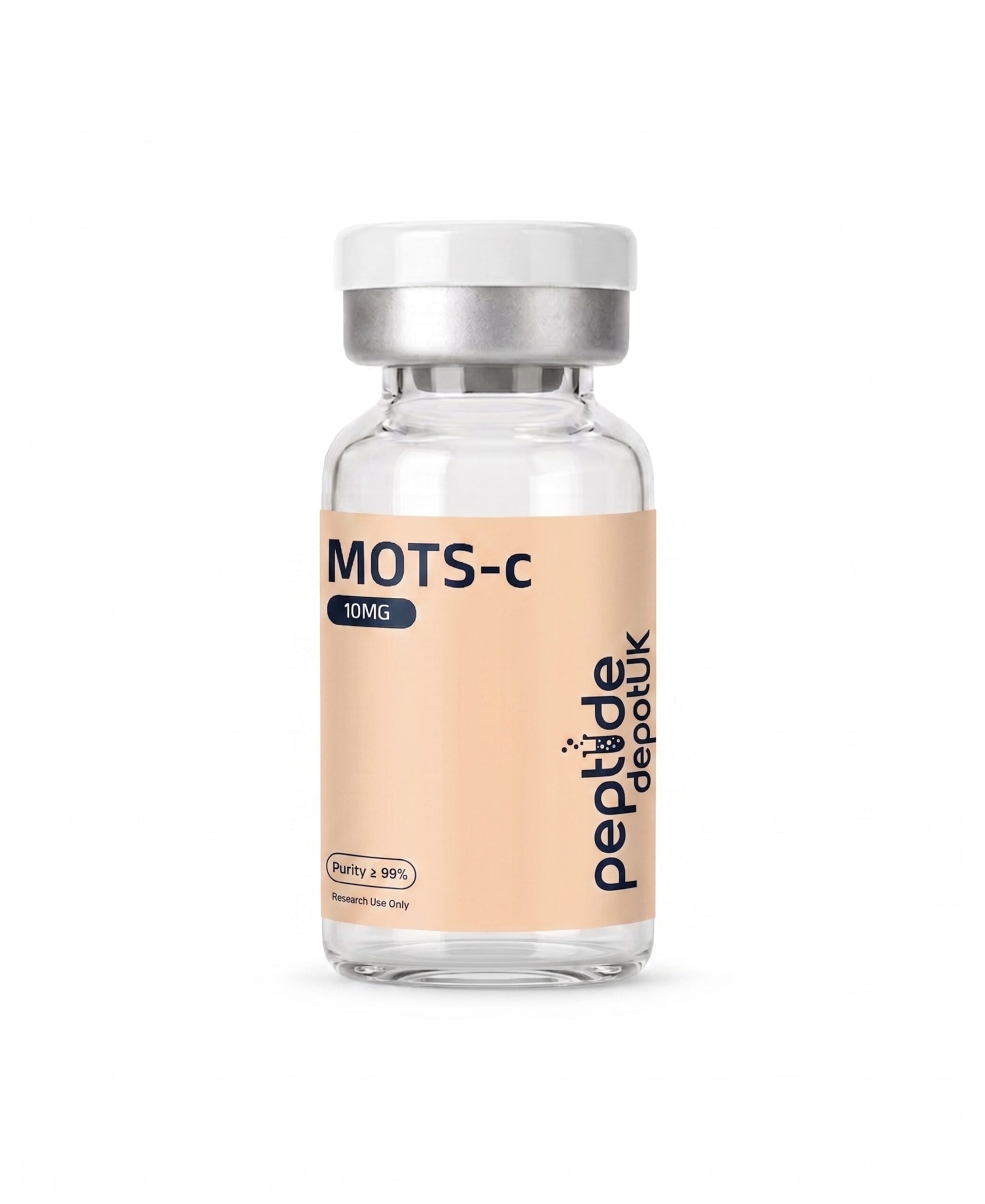
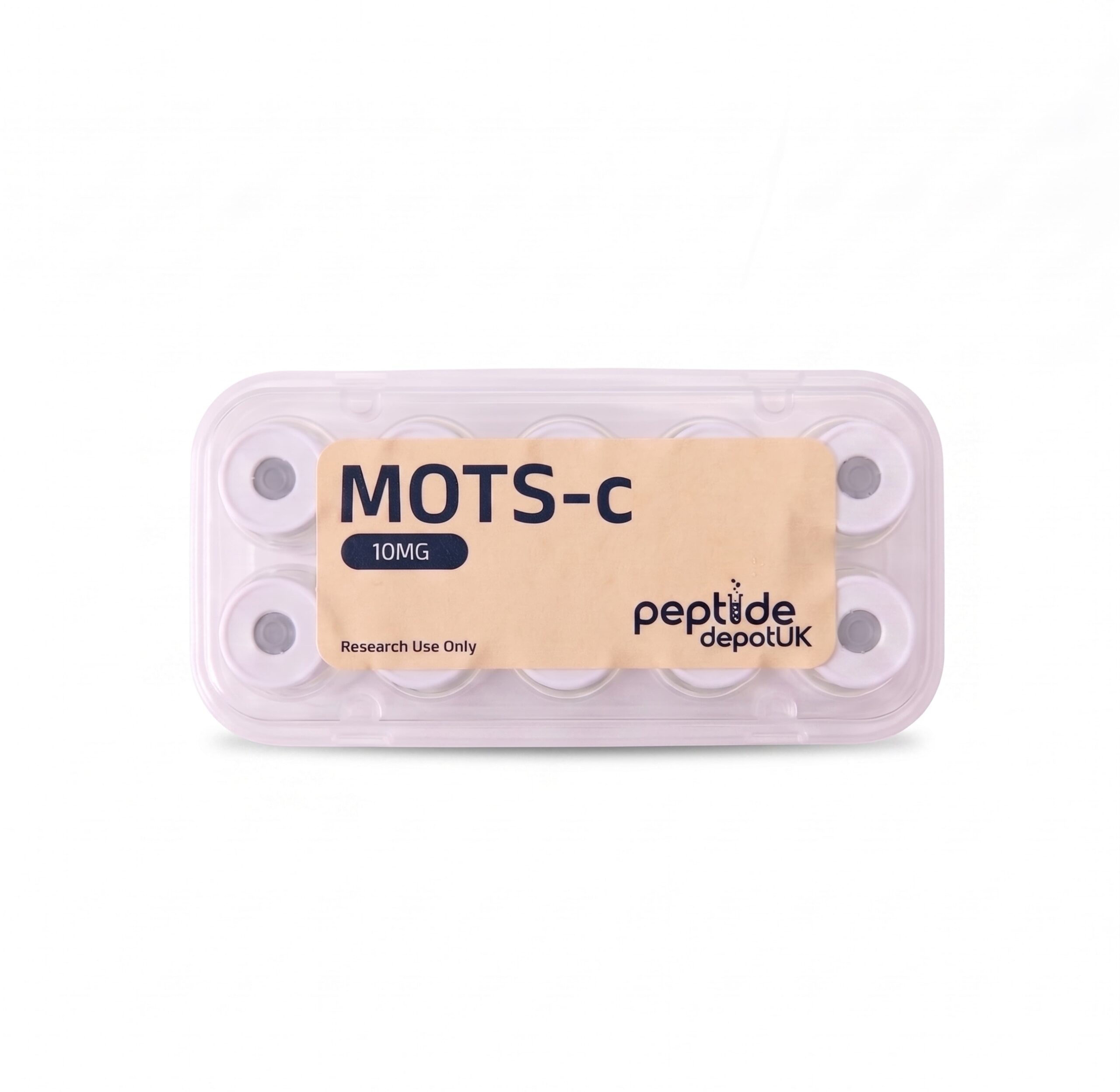






MOTS-c

Trusted & appreciated by 5,000+ researchers

£48.00

COA
Buy Now
Stock up & save
£48.00
1 Vial
5% Off
£46.00
2 Vials
12% Off
£42.00
3 Vials
18% Off
£39.00
5 Vials
25% Off
£36.00
Kit (10 Vials)
Research Use Only: These products are intended for laboratory research purposes only. By purchasing, you confirm you are a qualified researcher and understand this product is not for personal use.
Visa
Mastercard
Google Pay
SEPA
iDEAL
Bitcoin
Ethereum
USDT

Description

MOTS-c

MOTS-c (Mitochondrial Open Reading Frame of the 12S rRNA-c) is a naturally occurring 16-amino acid peptide encoded directly by mitochondrial DNA — making it one of a small group of peptides known to originate from the mitochondrial genome rather than the nuclear genome. First identified in 2015, it has since become a significant area of interest in metabolic and ageing research (Lee et al., 2015).

Mechanism of Action

  • Under stress or exercise conditions, MOTS-c moves from the mitochondria into the cell nucleus, where it helps regulate genes involved in energy balance and stress adaptation (Bhatt et al., 2022)
  • Its primary signalling pathway involves activating AMPK — a key regulator of how cells produce and use energy — which in turn influences glucose uptake, fat metabolism, and insulin sensitivity (Lee et al., 2015)
  • Research shows MOTS-c levels naturally decline with age, with circulating levels in older subjects measured approximately 21% lower than those in younger subjects (Bhatt et al., 2022)

Key Research Findings

  • Preclinical studies show MOTS-c treatment prevented both age-related and high-fat-diet-induced insulin resistance in mouse models (Lee et al., 2015)
  • Kim et al. (2016) characterise it as a novel mitochondrial signalling mechanism with implications for research into obesity, diabetes, exercise physiology, and longevity
  • Research also points to potential roles in reducing inflammation and supporting brain function, though these areas remain under active investigation (Zhai et al., 2023)

For research use only. Not intended for use in humans or animals.

References

Bhatt, M. P., Kim, S. J., & Cohen, P. (2022). https://pmc.ncbi.nlm.nih.gov/articles/PMC9570330/

Kim, S. J., Xiao, J., Wan, J., Cohen, P., & Yen, K. (2016). https://pubmed.ncbi.nlm.nih.gov/27216708/

Lee, C., Zeng, J., Drew, B. G., Sallam, T., Martin-Montalvo, A., Wan, J., Kim, S. J., Mehta, H., Hevener, A. L., de Cabo, R., & Cohen, P. (2015). https://pubmed.ncbi.nlm.nih.gov/25738459/

Zhai, D., Ye, Z., Jiang, Y., Xu, C., Rong, Y., Yang, X., Zhao, Y., & Chen, J. (2023). https://pubmed.ncbi.nlm.nih.gov/36670507/
Additional information

Size

10mg/vial

What are peptides?

Peptides are short chains of amino acids that act as signalling molecules in the body, playing a role in a wide range of biological processes including tissue repair, immune response, and cellular communication.

How are peptides used in research?

In research settings, peptides are studied for their ability to interact with specific receptors and biological pathways. This makes them valuable tools for scientific and laboratory analysis, helping researchers better understand how the body functions at a cellular level.

What payment methods do you accept?

We currently accept Credit Card, SEPA bank transfer, iDeal, Google Pay, Apple Pay, and Cryptocurrency (Bitcoin, Ethereum, and USDT).

How should I store my peptides?

All peptides are supplied in lyophilised (freeze-dried) form, ensuring stability during shipping and long-term storage. Unreconstituted vials should be kept in a cool, dry place away from direct light, with refrigeration recommended for extended periods. Once reconstituted for research purposes, peptides should be kept refrigerated and handled using sterile laboratory practices to maintain integrity throughout use.

How does shipping and delivery work?

Orders are processed and dispatched within 48 hours of purchase. Delivery typically takes 6-9 business days depending on your location. Tracking information is available directly on our website. Free shipping is applied automatically on all orders over 150 euros.

Do you offer refunds or returns?

Due to the nature of research products, we are unable to accept returns. However if your order arrives damaged or incorrect please contact us within 48 hours.

How can I be sure of product quality?

All our products are lab-tested by Janoshik to ensure high purity and compliance with research-grade quality standards.

MOTS-c

MOTS-c (Mitochondrial Open Reading Frame of the 12S rRNA-c) is a naturally occurring 16-amino acid peptide encoded directly by mitochondrial DNA — making it one of a small group of peptides known to originate from the mitochondrial genome rather than the nuclear genome. First identified in 2015, it has since become a significant area of interest in metabolic and ageing research (Lee et al., 2015).

Mechanism of Action

  • Under stress or exercise conditions, MOTS-c moves from the mitochondria into the cell nucleus, where it helps regulate genes involved in energy balance and stress adaptation (Bhatt et al., 2022)
  • Its primary signalling pathway involves activating AMPK — a key regulator of how cells produce and use energy — which in turn influences glucose uptake, fat metabolism, and insulin sensitivity (Lee et al., 2015)
  • Research shows MOTS-c levels naturally decline with age, with circulating levels in older subjects measured approximately 21% lower than those in younger subjects (Bhatt et al., 2022)

Key Research Findings

  • Preclinical studies show MOTS-c treatment prevented both age-related and high-fat-diet-induced insulin resistance in mouse models (Lee et al., 2015)
  • Kim et al. (2016) characterise it as a novel mitochondrial signalling mechanism with implications for research into obesity, diabetes, exercise physiology, and longevity
  • Research also points to potential roles in reducing inflammation and supporting brain function, though these areas remain under active investigation (Zhai et al., 2023)

For research use only. Not intended for use in humans or animals.

References

Bhatt, M. P., Kim, S. J., & Cohen, P. (2022). https://pmc.ncbi.nlm.nih.gov/articles/PMC9570330/

Kim, S. J., Xiao, J., Wan, J., Cohen, P., & Yen, K. (2016). https://pubmed.ncbi.nlm.nih.gov/27216708/

Lee, C., Zeng, J., Drew, B. G., Sallam, T., Martin-Montalvo, A., Wan, J., Kim, S. J., Mehta, H., Hevener, A. L., de Cabo, R., & Cohen, P. (2015). https://pubmed.ncbi.nlm.nih.gov/25738459/

Zhai, D., Ye, Z., Jiang, Y., Xu, C., Rong, Y., Yang, X., Zhao, Y., & Chen, J. (2023). https://pubmed.ncbi.nlm.nih.gov/36670507/