






Description
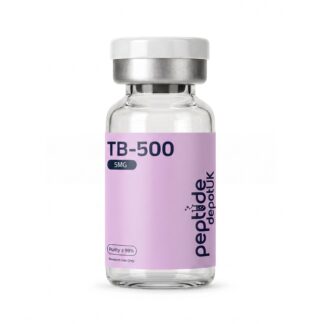
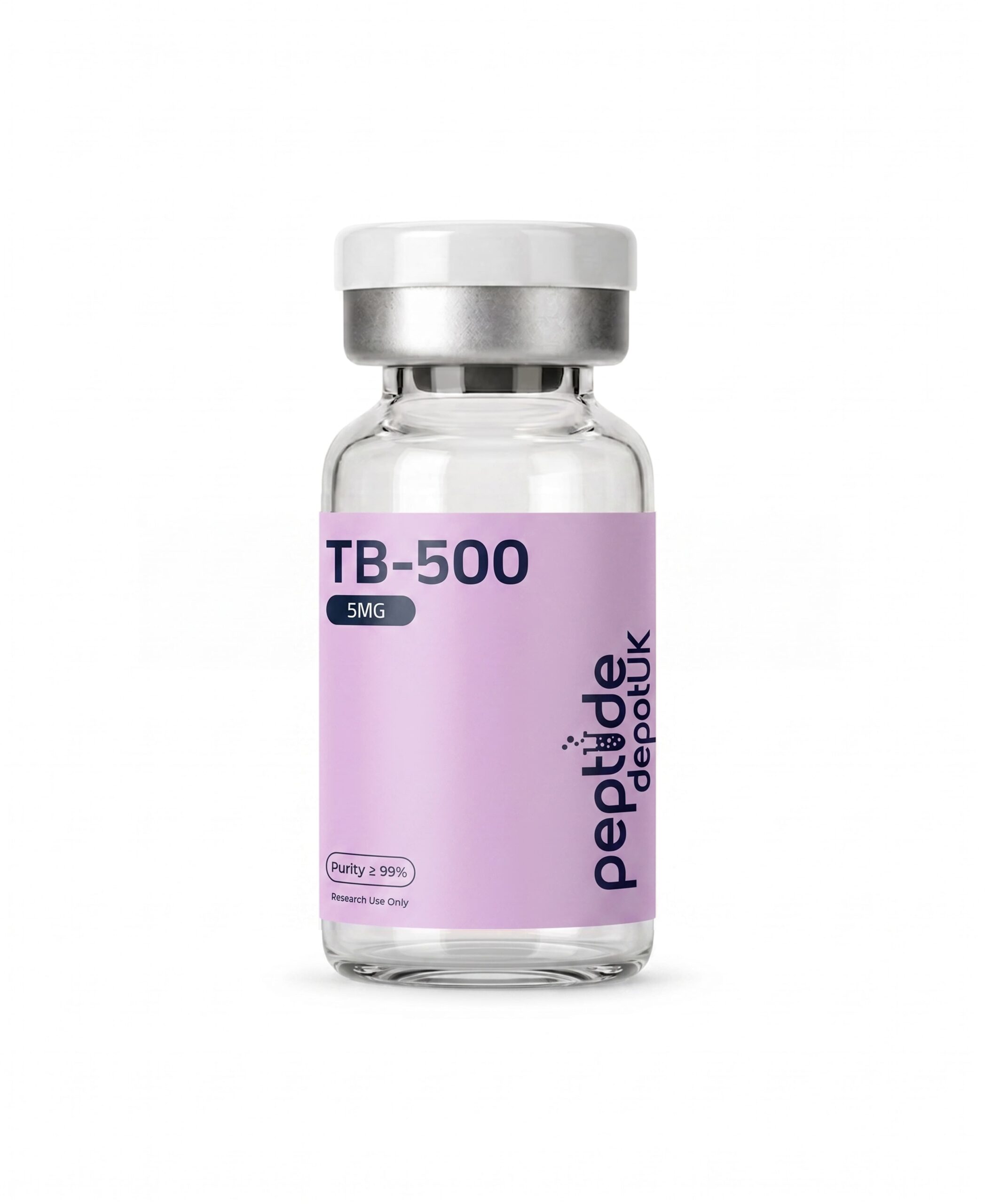
TB-500 (Thymosin Beta-4 Fragment)
TB-500 is a synthetic research peptide matching the active actin-binding segment (LKKTETQ) of Thymosin Beta-4 (Tβ4), a naturally occurring protein present in nearly all mammalian cells, known for its involvement in tissue repair and cell movement.
Mechanism of Action
- TB-500’s primary activity is binding to actin, a structural protein central to cell shape, motility, and division. Through this interaction, the peptide influences how cells migrate toward sites of injury
- Research indicates it supports new blood vessel formation, aids collagen deposition, and helps moderate inflammation in preclinical wound repair models (Goldstein et al., 2012)
- Preclinical studies also show a reduction in scar tissue formation, linked to fewer myofibroblasts present at the wound site (Goldstein et al., 2012)
Key Research Findings
- In rodent models, both topical and systemic application of the parent Tβ4 sequence increased wound re-epithelialisation by as much as 61% relative to controls, with the actin-binding fragment alone showing comparable repair activity (Philp et al., 2003)
- Rahaman et al. (2024) found that some of TB-500’s wound-healing activity in fibroblast models may trace back to its metabolite Ac-LKKTE, underscoring why metabolite profiling remains a relevant part of ongoing research
- Esposito et al. (2012) confirmed and characterised the structural identity of TB-500 (Ac-LKKTETQ) using high-resolution mass spectrometry
For research use only. Not intended for use in humans or animals.
References
Esposito, S., Deventer, M., Van Thuyne, W., Delbeke, F. T., & Van Eenoo, P. (2012). https://pubmed.ncbi.nlm.nih.gov/22962027/
Goldstein, A. L., Hannappel, E., Sosne, G., & Kleinman, H. K. (2012). https://pubmed.ncbi.nlm.nih.gov/22074294/
Philp, D., Badamchian, M., Scheremeta, B., Nguyen, M., Goldstein, A. L., & Kleinman, H. K. (2003). https://pubmed.ncbi.nlm.nih.gov/12581422/
Rahaman, K. A., Muresan, A. R., Min, H., Son, J., Kang, M. J., & Kwon, O. S. (2024). https://www.sciencedirect.com/science/article/pii/S1570023224000412