






Description
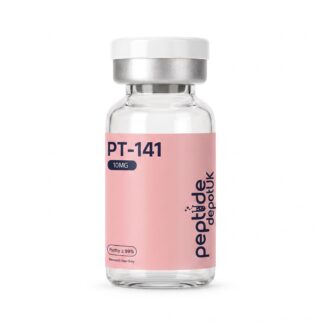
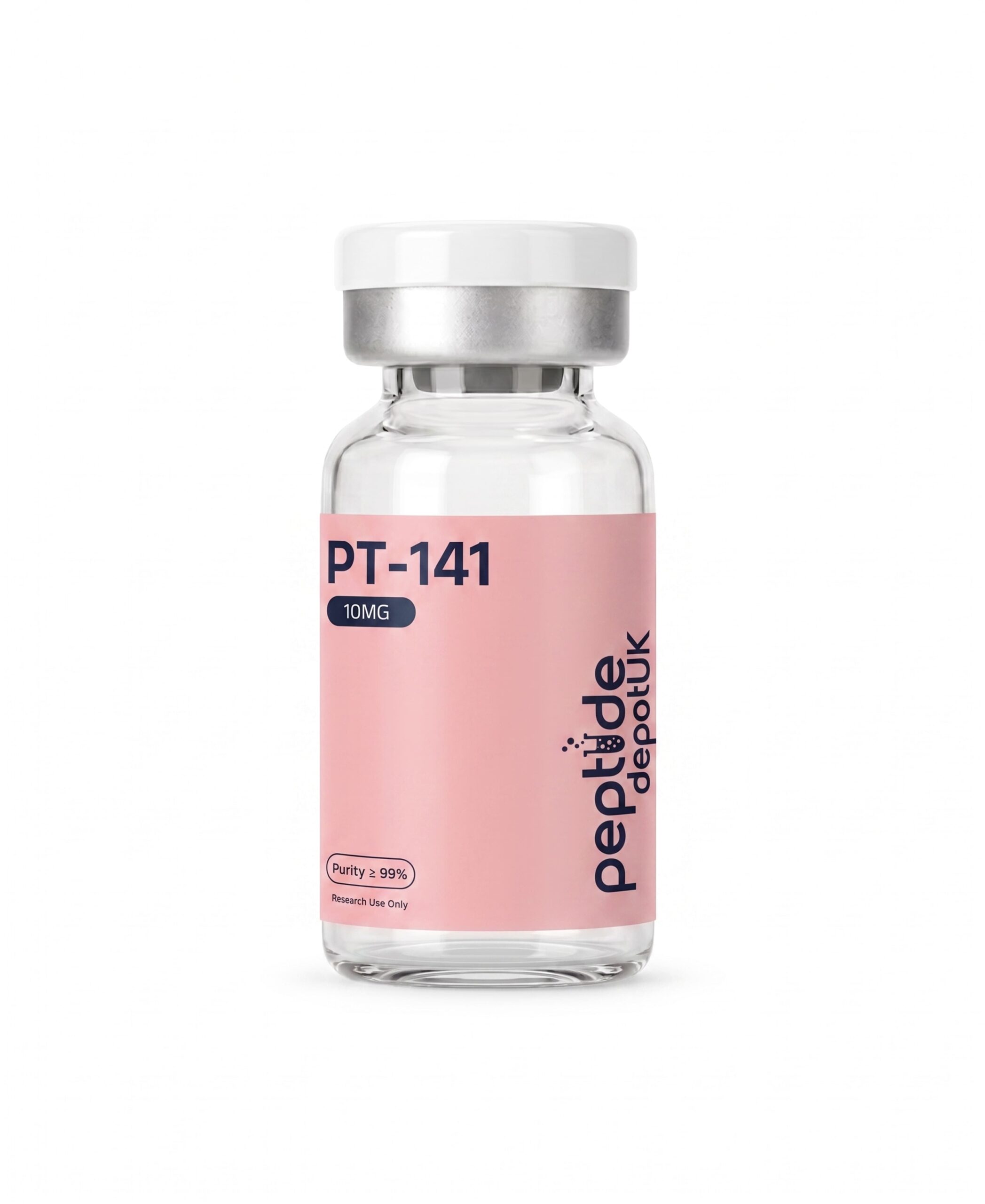
PT-141 (Bremelanotide)
PT-141 (bremelanotide) stands apart from most peptides studied for sexual function because its site of action is the brain, not the vasculature. Where many compounds in this space work by acting on blood vessels, PT-141 instead binds receptors in the hypothalamus and limbic system, the areas of the brain governing motivation, desire, and arousal. That distinction makes it a useful tool for researchers looking at how the central nervous system, rather than peripheral blood flow, drives these responses.
Key research findings
- Receptor binding in the brain sets off a downstream chemical signalling cascade inside nerve cells, giving researchers a consistent method for engaging and studying the melanocortin system under lab conditions (Molinoff et al., 2003)
- Pharmacokinetic work in healthy male subjects tracked the compound’s behavior post-administration, showing peak concentration at roughly 30 minutes and clearance within about two hours, data that’s useful for building precise dosing timelines in study protocols (Diamond et al., 2004)
- In subjects who hadn’t responded to standard vascular-acting compounds, PT-141 still produced measurable effects, evidence that its brain-based mechanism operates independently rather than duplicating existing approaches (Rosen et al., 2004)
- PT-141 has demonstrated the ability to cross the blood-brain barrier in preclinical studies, a trait most peptides lack, which is precisely what enables its central activity and makes it valuable for research into how brain receptor engagement translates into physiological effects (Molinoff et al., 2003)
For research use only. Not intended for use in humans or animals.
References
Molinoff, P.B., et al. (2003). https://pubmed.ncbi.nlm.nih.gov/12851303/
Diamond, L.E., et al. (2004). https://pubmed.ncbi.nlm.nih.gov/14963471/
Rosen, R.C., et al. (2004). https://pubmed.ncbi.nlm.nih.gov/14999221/