
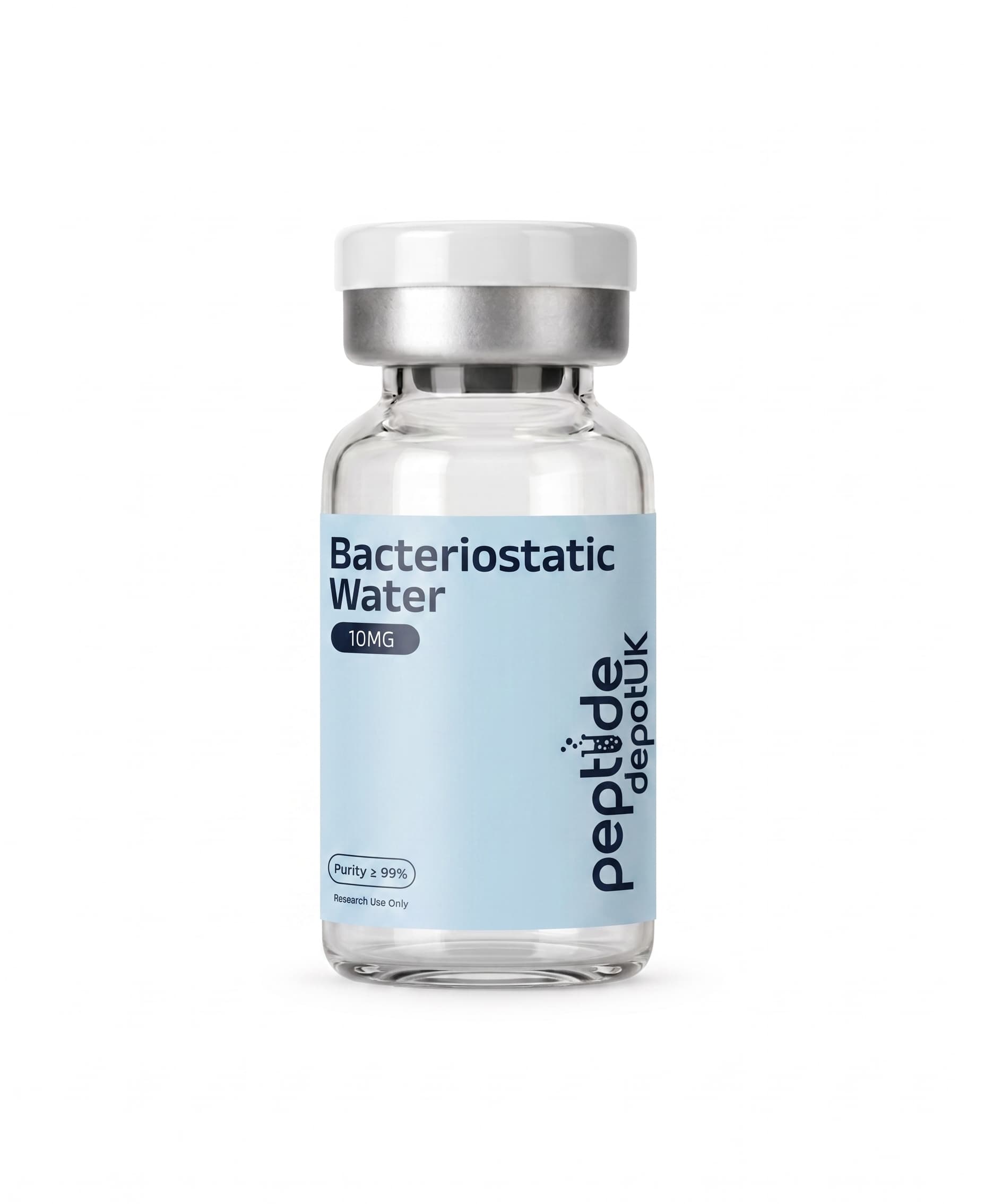
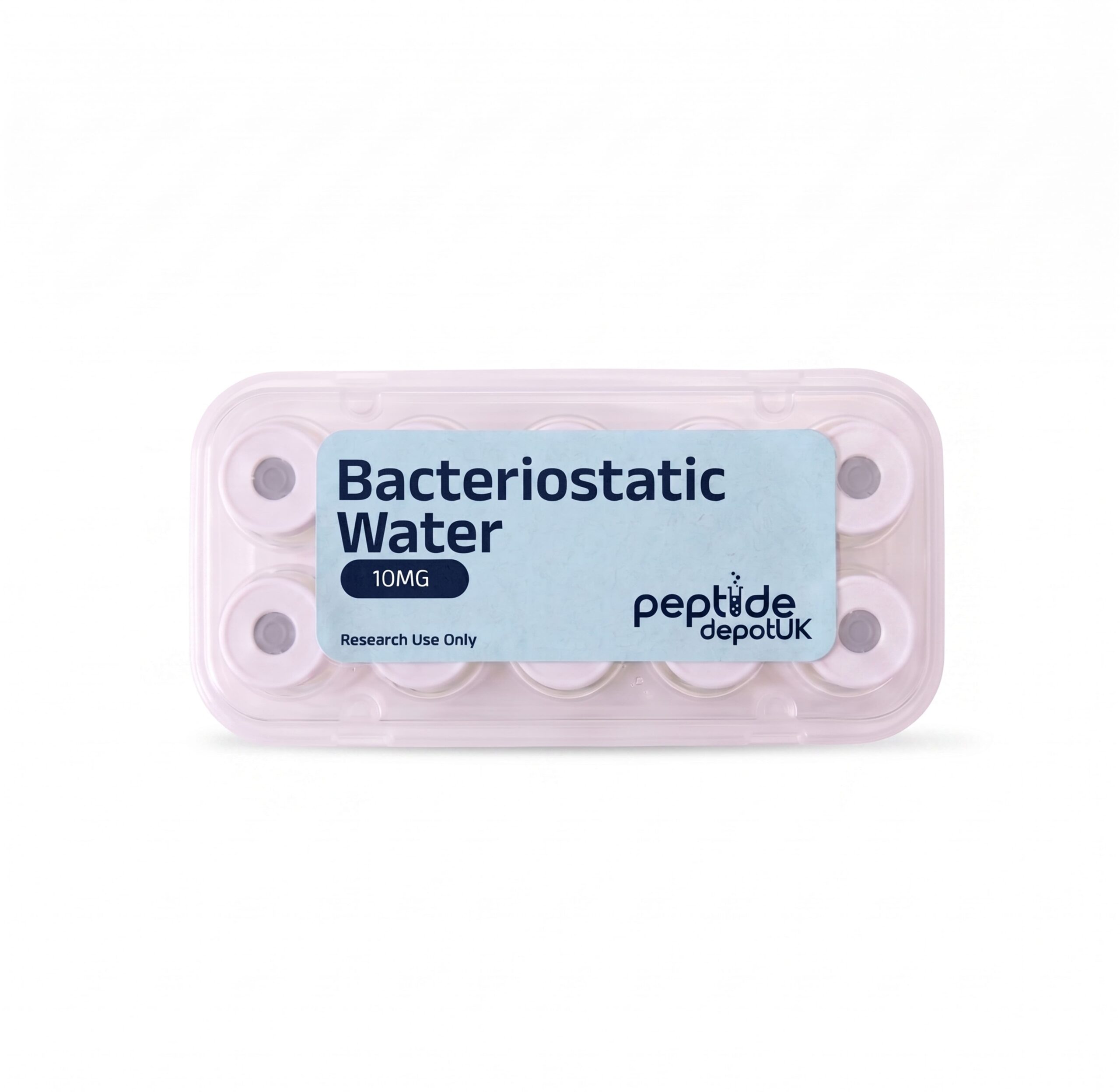






Bacteriostatic Water (10 Vials)

Trusted & appreciated by 5,000+ researchers

From £25.00

Bacteriostatic water, a sterile solution containing benzyl alcohol, is utilized primarily for diluting or dissolving medications for injection. Recent bacteriostatic water research highlights its effectiveness in maintaining the stability and integrity of pharmaceutical agents, thereby enhancing their therapeutic potential. This solution is particularly valuable in clinical settings where multi-dose vials are employed, as it helps prevent microbial growth. Understanding the properties and applications of bacteriostatic water is essential for ensuring patient safety and optimal medication delivery.

Buy Now
For Laboratory Research Only: This listing is intended strictly for qualified researchers conducting laboratory work. Completing a purchase confirms you meet this criteria and will not use the product for personal or human consumption.
We accept
Visa
Mastercard
Google Pay
Bitcoin
Ethereum
SKU: BAC10 Category:

Description

Bacteriostatic Water (BAC Water)

Bacteriostatic Water (BAC Water) is a sterile, non-pyrogenic aqueous solution containing 0.9% (9 mg/mL) benzyl alcohol as an antimicrobial preservative. Benzyl alcohol works by disrupting the cell membranes of microorganisms, suppressing bacterial growth rather than eliminating existing organisms outright. That preservative effect is what allows a single multi-dose vial to be safely accessed multiple times under aseptic technique, with a recommended in-use window of up to 28 days from first puncture. The solution sits within a pH range of 4.5 to 7.0. In laboratory settings, it’s commonly used as a diluent for reconstituting lyophilised compounds, peptides, and proteins, though researchers should confirm compound compatibility with benzyl alcohol beforehand, since documented interactions exist with certain formulations.

For research use only. Not intended for use in humans or animals.

References

  1. U.S. National Library of Medicine. Bacteriostatic Water for Injection, USP. DailyMed. https://dailymed.nlm.nih.gov/dailymed/lookup.cfm?setid=87d6e9dc-fe3b-4593-ac9a-d7493d1959c7
  2. Bis RL, et al. (2015). Role of benzyl alcohol in the unfolding and aggregation of interferon α-2a. Journal of Pharmaceutical Sciences, 104(2):407–15. https://pubmed.ncbi.nlm.nih.gov/25100180/
  3. Akers MJ. (2002). Excipient-drug interactions in parenteral formulations. Journal of Pharmaceutical Sciences, 91(11):2344–2355. https://pubmed.ncbi.nlm.nih.gov/12379918/
  4. Nair B. (2001). Final report on the safety assessment of benzyl alcohol, benzoic acid, and sodium benzoate. International Journal of Toxicology, 20(Suppl 3):23–50. https://pubmed.ncbi.nlm.nih.gov/11766131/
Additional information

Size

10mg/vial

What is a peptide, exactly?

Peptides are short chains of amino acids, smaller than proteins, that function as signalling molecules within biological systems. They're involved in processes such as tissue repair, immune activity, and communication between cells.

What role do peptides play in research?

Peptides are studied for how selectively they bind to receptors and influence specific cellular pathways. That precision makes them a valuable tool in laboratory settings for investigating how biological systems function at a molecular level.

What are my payment options?

Card payment, UK bank transfer, and cryptocurrency (Bitcoin and Ethereum) are all accepted.

How do I store this product correctly?

This product ships lyophilised (freeze-dried) to remain stable throughout transit and storage. Keep it cool, dry, and shielded from direct light before use, refrigerating if holding it longer term. Once reconstituted, refrigerate immediately and handle with standard sterile technique to preserve integrity.

What are your shipping timeframes?

Delivery is UK-only. Orders placed before 2pm on a business day go out same-day; anything later, or placed on a weekend, ships the next business day. Most orders arrive within 48 hours of dispatch, with tracking sent directly to you. Orders over £200 ship free automatically.

What's your policy on returns?

As a research product, this item isn't eligible for standard returns. If it arrives damaged or you received the wrong item, reach out within 48 hours and we'll get it resolved.

How is purity confirmed for this product?

Every batch is independently tested in a laboratory before listing, confirming it meets research-grade purity standards. A Certificate of Analysis is available for this product.

Bacteriostatic Water (BAC Water)

Bacteriostatic Water (BAC Water) is a sterile, non-pyrogenic aqueous solution containing 0.9% (9 mg/mL) benzyl alcohol as an antimicrobial preservative. Benzyl alcohol works by disrupting the cell membranes of microorganisms, suppressing bacterial growth rather than eliminating existing organisms outright. That preservative effect is what allows a single multi-dose vial to be safely accessed multiple times under aseptic technique, with a recommended in-use window of up to 28 days from first puncture. The solution sits within a pH range of 4.5 to 7.0. In laboratory settings, it’s commonly used as a diluent for reconstituting lyophilised compounds, peptides, and proteins, though researchers should confirm compound compatibility with benzyl alcohol beforehand, since documented interactions exist with certain formulations.

For research use only. Not intended for use in humans or animals.

References

  1. U.S. National Library of Medicine. Bacteriostatic Water for Injection, USP. DailyMed. https://dailymed.nlm.nih.gov/dailymed/lookup.cfm?setid=87d6e9dc-fe3b-4593-ac9a-d7493d1959c7
  2. Bis RL, et al. (2015). Role of benzyl alcohol in the unfolding and aggregation of interferon α-2a. Journal of Pharmaceutical Sciences, 104(2):407–15. https://pubmed.ncbi.nlm.nih.gov/25100180/
  3. Akers MJ. (2002). Excipient-drug interactions in parenteral formulations. Journal of Pharmaceutical Sciences, 91(11):2344–2355. https://pubmed.ncbi.nlm.nih.gov/12379918/
  4. Nair B. (2001). Final report on the safety assessment of benzyl alcohol, benzoic acid, and sodium benzoate. International Journal of Toxicology, 20(Suppl 3):23–50. https://pubmed.ncbi.nlm.nih.gov/11766131/