
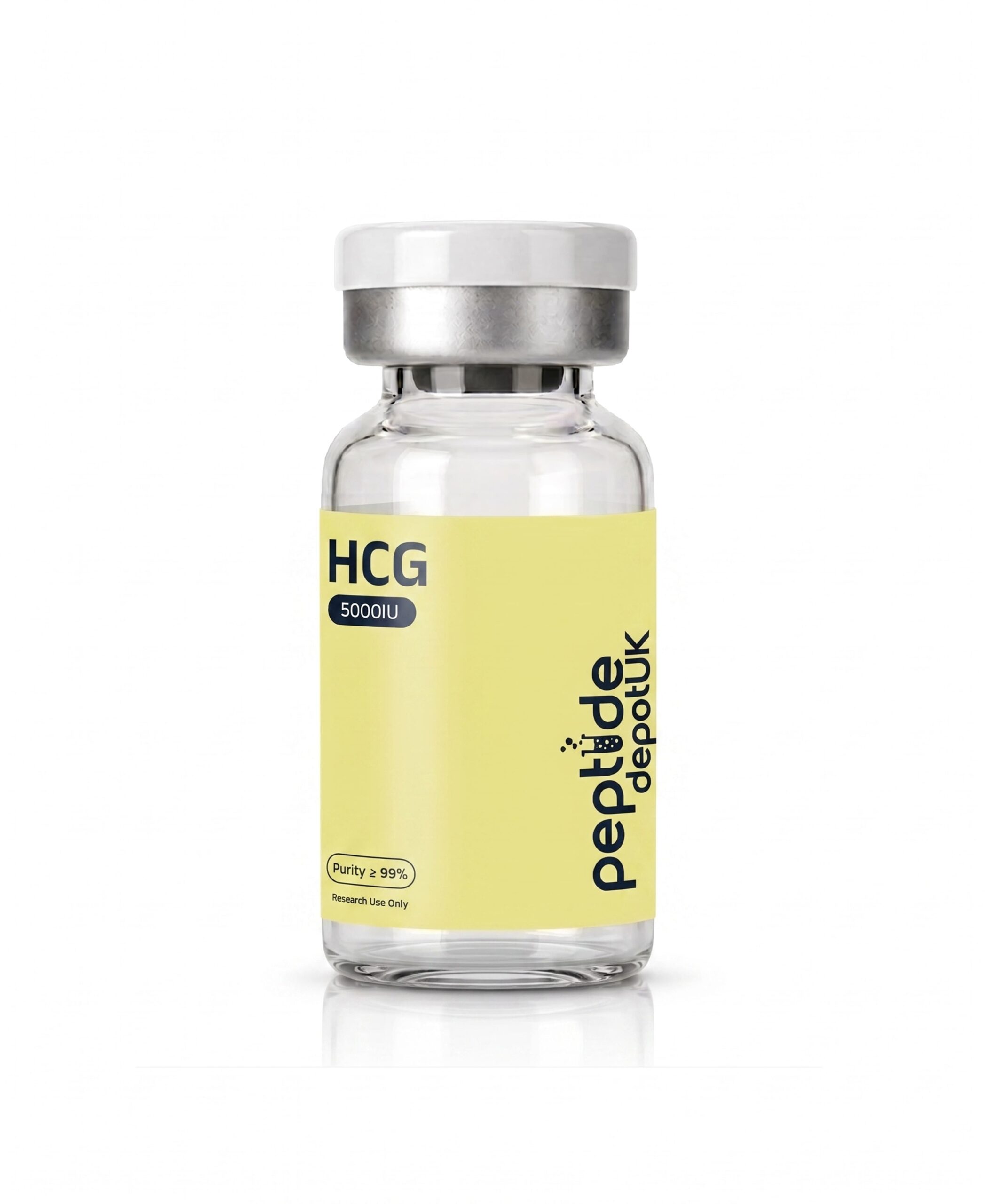





Description
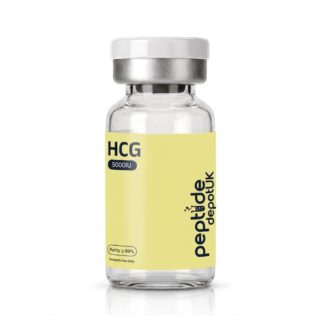
HCG (Human Chorionic Gonadotropin)
HCG is a glycoprotein hormone the placenta produces naturally during early pregnancy, where it’s essential for sustaining hormone production through the first trimester. Its structural and functional overlap with luteinising hormone (LH), the pituitary signal responsible for triggering testosterone production in men and ovulation in women, has made it a go-to tool compound in reproductive endocrinology research.
Key research findings
- Studies on Leydig cells (the testosterone-producing cells within the testes) showed HCG binding the LH receptor sets off an enzyme cascade that converts cholesterol into testosterone, making it a valuable model for studying the testosterone biosynthesis pathway (Ziecik et al., 2007)
- Structural comparisons between HCG and LH identified a 24-amino acid extension on the C-terminal of HCG’s beta subunit, which meaningfully extends its circulation time relative to LH, explaining how HCG sustains corpus luteum function over the weeks of early pregnancy where LH’s short half-life would fall short (Lapthorn et al., 1994)
- Research has also located LH/HCG receptors outside reproductive tissue, in the thyroid, adrenal gland, and uterine endometrium, opening up research questions around HCG’s signalling roles beyond reproduction (Cole, 2012)
- Work mapping HCG receptor activation has identified both the established cAMP-dependent pathway and additional downstream signalling cascades, pointing to a signalling biology more layered than earlier models suggested (Cole, 2012)
For research use only. Not intended for use in humans or animals.
References
Cole, L. A. (2012). https://pubmed.ncbi.nlm.nih.gov/22046241/
Lapthorn, A. J., et al. (1994). https://pubmed.ncbi.nlm.nih.gov/8205136/
Ziecik, A. J., et al. (2007). https://pubmed.ncbi.nlm.nih.gov/11330789/