






Description
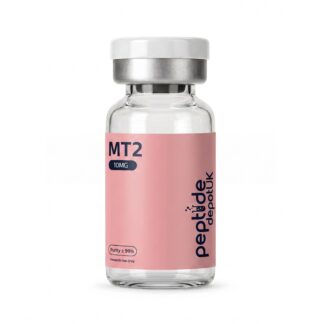
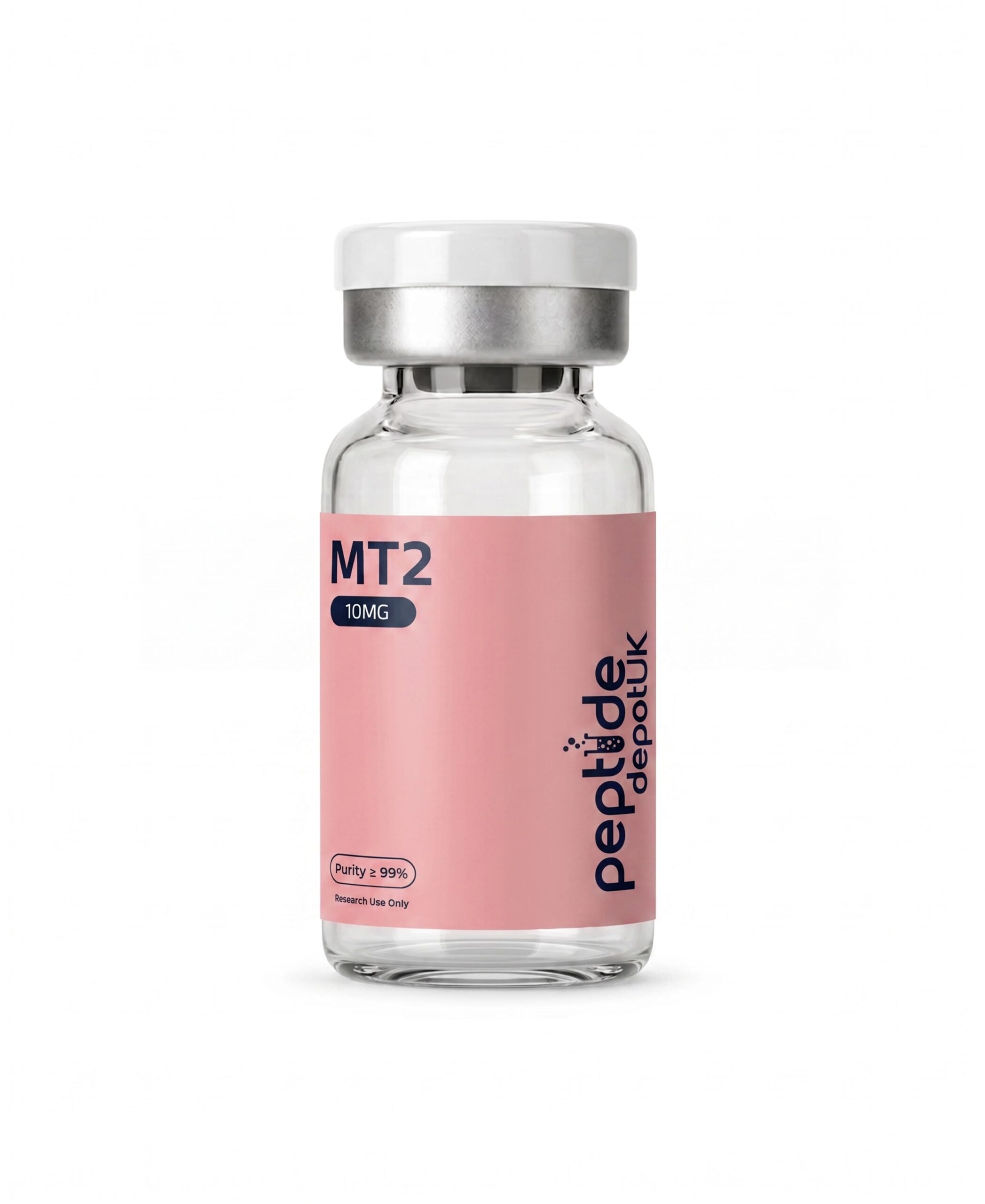
Melanotan 2
Melanotan 2 (MT-II) is a synthetic cyclic peptide and non-selective agonist across the melanocortin receptor family, designed as an analogue of alpha-melanocyte-stimulating hormone (α-MSH), a naturally occurring hormone involved in pigmentation, appetite regulation, and sexual function (Rösler & Giuliano, 2014).
Mechanism of Action
- MT-II activates several melanocortin receptor subtypes (MC1R through MC5R), with research attention particularly focused on MC3R and MC4R, receptors expressed in brain regions tied to appetite control, energy balance, and arousal
- By engaging these central nervous system receptors, MT-II has shown in preclinical models an ability to suppress food intake and reduce appetite-driven behaviour without triggering an aversive response (Rupprecht et al., 2022)
- Activity at MC1R has also been documented, a receptor linked to pigment-producing skin cells (Kim et al., 2023)
Key Research Findings
- An early double-blind, placebo-controlled crossover study found MT-II initiated erection in 17 of 20 male subjects with erectile dysfunction, with 68% of MT-II doses associated with increased sexual desire versus 19% for placebo (Wessells et al., 2000)
- Rodent studies showed dose-dependent enhancement of peripheral nerve regeneration, along with partial protection against chemotherapy-induced nerve damage (Giuliano et al., 2003)
- MT-II has served as a research tool for mapping the melanocortin system’s role across processes including thermogenesis, feeding behaviour, and neuroendocrine signalling (Rupprecht et al., 2022)
For research use only. Not intended for use in humans or animals.
References
Giuliano, F., Clément, P., Droupy, S., Alexandre, L., & Bernabé, J. (2003). https://pubmed.ncbi.nlm.nih.gov/12591111/
Kim, J., Cho, Y., Nam, G., & Choi, S. (2023). https://pmc.ncbi.nlm.nih.gov/articles/PMC10418475/
Rösler, M., & Giuliano, F. (2014). https://pubmed.ncbi.nlm.nih.gov/25096243/
Rupprecht, L. E., Doyle, M. R., Kohut, S. J., & Bergman, J. (2022). https://pubmed.ncbi.nlm.nih.gov/36155088/
Wessells, H., Levine, N., Hadley, M. E., Dorr, R., & Hruby, V. (2000). https://pubmed.ncbi.nlm.nih.gov/11035391/