
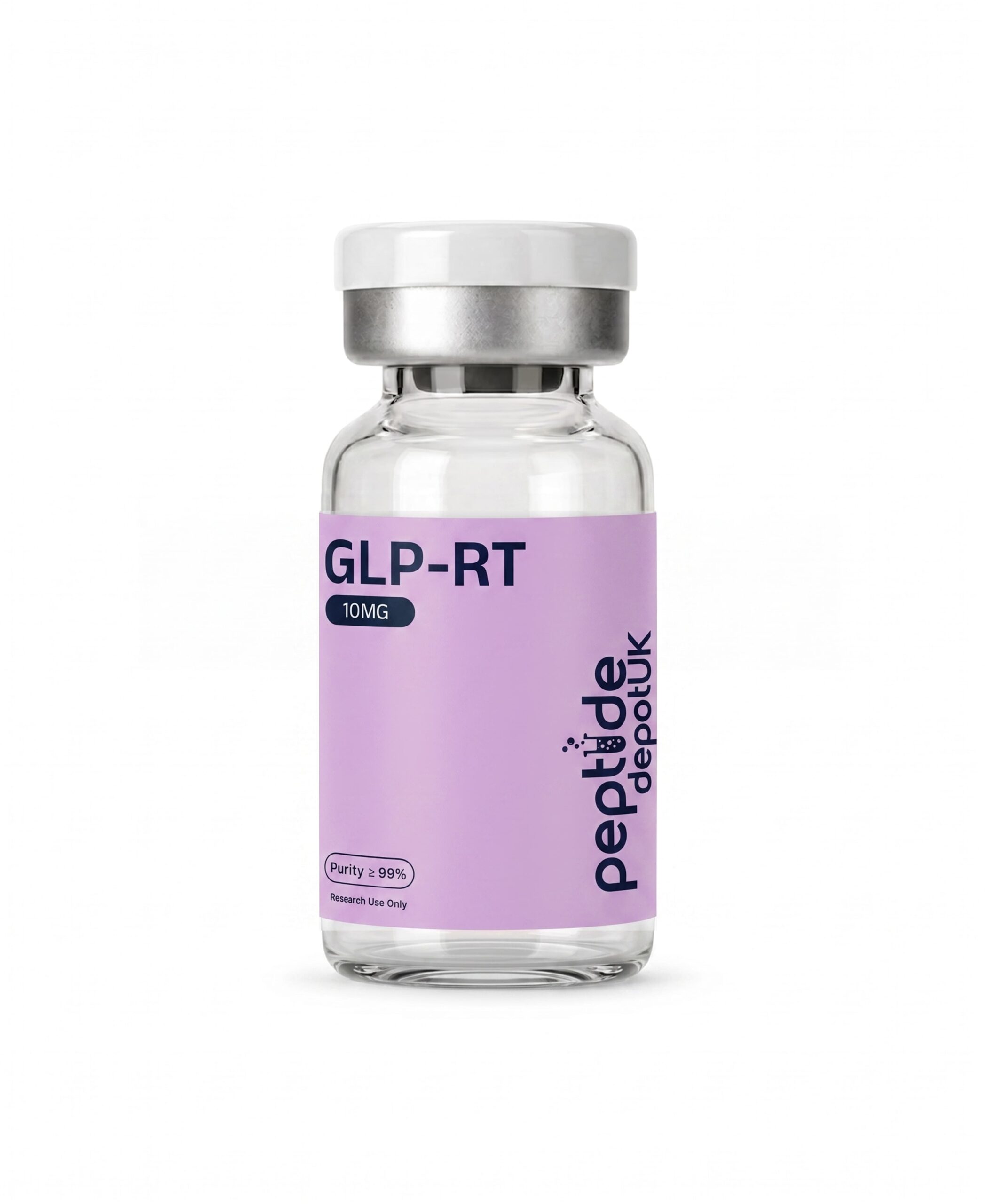
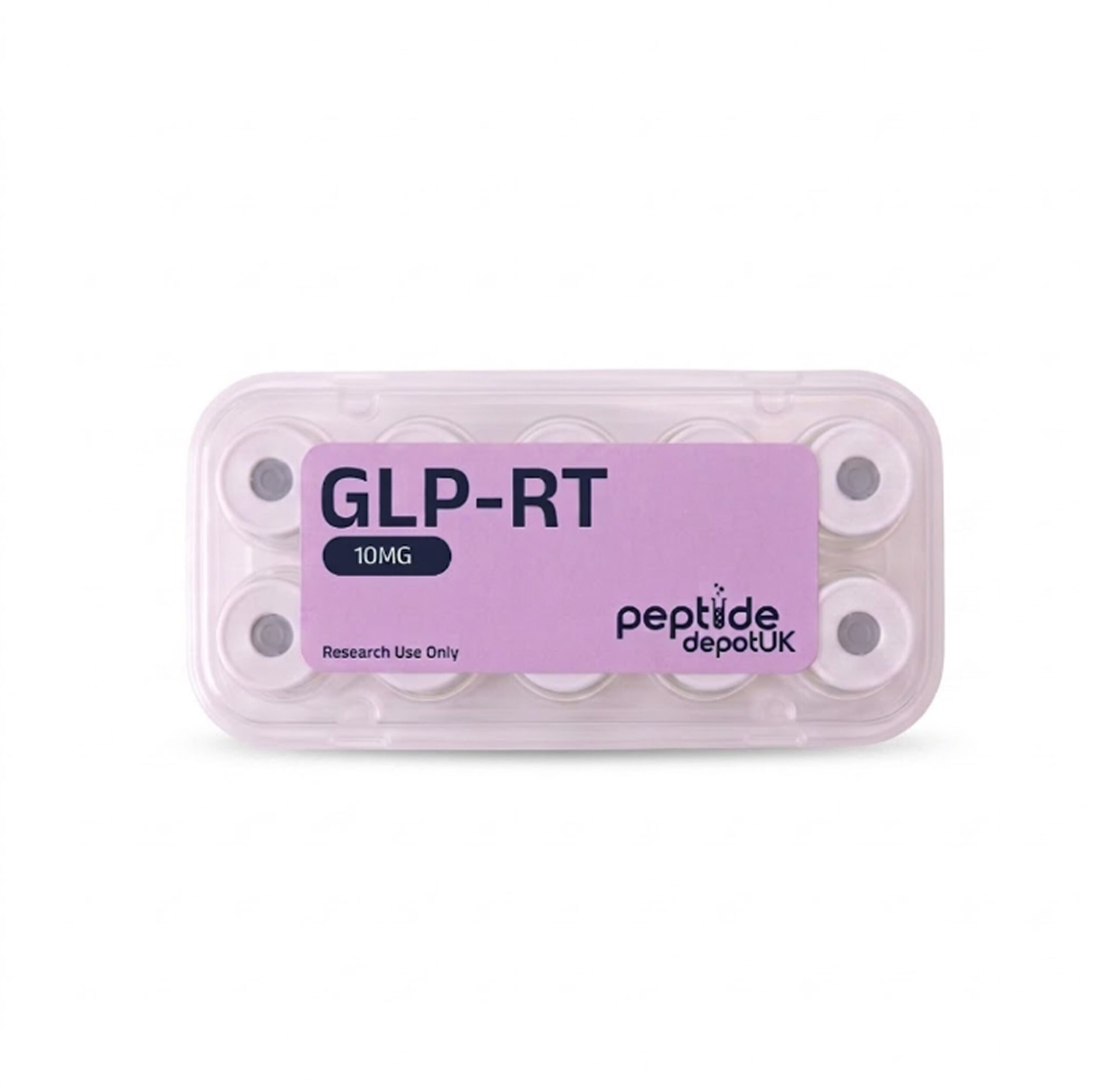






GLP-RT

Trusted & appreciated by 5,000+ researchers

Price range: £65.00 through £148.00

COA
Buy Now
Stock up & save
£65.00
1 Vial
8% Off
£60.00
2 Vials
15% Off
£55.00
3 Vials
22% Off
£51.00
5 Vials
30% Off
£46.00
Kit (10 Vials)
Research Use Only: These products are intended for laboratory research purposes only. By purchasing, you confirm you are a qualified researcher and understand this product is not for personal use.
Visa
Mastercard
Google Pay
SEPA
iDEAL
Bitcoin
Ethereum
USDT

Description

Retatrutide

GLP-RT (LY3437943) is a synthetic 39-amino acid peptide and the first triple receptor agonist to reach clinical trials, simultaneously targeting the GLP-1, GIP, and glucagon receptors. It represents the next generation beyond dual agonists such as tirzepatide, adding glucagon receptor activation as a third distinct mechanism (Jastreboff et al., 2023).

Mechanism of Action

  • By activating all three receptors together, GLP-RT combines the appetite-suppressing and insulin-stimulating effects of GLP-1 and GIP with the energy-expenditure and fat-burning effects driven by glucagon receptor activation
  • Glucagon receptor activation promotes the breakdown of fats, increases energy use, and has a direct effect on the liver — an organ that carries abundant glucagon receptors but no GLP-1 or GIP receptors — making GLP-RT of particular interest for liver-related metabolic research (Bhatt et al., 2024)
  • The peptide is engineered with a fatty diacid chain that extends its half-life, enabling once-weekly dosing, and includes structural modifications that protect it from enzymatic breakdown (Nair et al., 2025)

Key Research Findings

  • In the phase 2 obesity trial, subjects receiving the 12 mg dose achieved a mean body weight reduction of 24.2% over 48 weeks — with no plateau observed — exceeding weight loss reported with both GLP-SM and GLP-TZ at comparable timepoints (Jastreboff et al., 2023)
  • In the phase 2 type 2 diabetes trial, 82% of participants on the 12 mg dose reached normal blood sugar levels (HbA1c ≤ 6.5%) after 36 weeks, alongside dose-dependent reductions in body weight of up to 16.9% (Rosenstock et al., 2023)
  • A phase 2a liver disease trial documented up to 82% reduction in liver fat in subjects with metabolic liver disease, with phase 3 trials now underway across obesity, type 2 diabetes, and liver disease indications (Harrison et al., 2024)

For research use only. Not intended for use in humans or animals.

References

Harrison, S. A., Taub, R., Neff, G. W., Lucas, K. J., Labriola, D., Moussa, S. E., Younossi, Z. M., & Loomba, R. (2024). https://www.nature.com/articles/s41591-024-03018-2

Jastreboff, A. M., Kaplan, L. M., Frías, J. P., Wu, Q., Du, Y., Gurbuz, S., & Wadden, T. A. (2023). https://www.nejm.org/doi/full/10.1056/NEJMoa2301972

Nair, A., Rodrigues, A., & Fonseca, V. (2025). https://pmc.ncbi.nlm.nih.gov/articles/PMC12190491/

Rosenstock, J., Frias, J., Jastreboff, A. M., Du, Y., Lou, J., & Gurbuz, S. (2023). https://pubmed.ncbi.nlm.nih.gov/37385280/
Additional information

Size

10mg/vial, 30mg/vial

What are peptides?

Peptides are short chains of amino acids that act as signalling molecules in the body, playing a role in a wide range of biological processes including tissue repair, immune response, and cellular communication.

How are peptides used in research?

In research settings, peptides are studied for their ability to interact with specific receptors and biological pathways. This makes them valuable tools for scientific and laboratory analysis, helping researchers better understand how the body functions at a cellular level.

What payment methods do you accept?

We currently accept Credit Card, SEPA bank transfer, iDeal, Google Pay, Apple Pay, and Cryptocurrency (Bitcoin, Ethereum, and USDT).

How should I store my peptides?

All peptides are supplied in lyophilised (freeze-dried) form, ensuring stability during shipping and long-term storage. Unreconstituted vials should be kept in a cool, dry place away from direct light, with refrigeration recommended for extended periods. Once reconstituted for research purposes, peptides should be kept refrigerated and handled using sterile laboratory practices to maintain integrity throughout use.

How does shipping and delivery work?

Orders are processed and dispatched within 48 hours of purchase. Delivery typically takes 6-9 business days depending on your location. Tracking information is available directly on our website. Free shipping is applied automatically on all orders over 150 euros.

Do you offer refunds or returns?

Due to the nature of research products, we are unable to accept returns. However if your order arrives damaged or incorrect please contact us within 48 hours.

How can I be sure of product quality?

All our products are lab-tested by Janoshik to ensure high purity and compliance with research-grade quality standards.

Retatrutide

GLP-RT (LY3437943) is a synthetic 39-amino acid peptide and the first triple receptor agonist to reach clinical trials, simultaneously targeting the GLP-1, GIP, and glucagon receptors. It represents the next generation beyond dual agonists such as tirzepatide, adding glucagon receptor activation as a third distinct mechanism (Jastreboff et al., 2023).

Mechanism of Action

  • By activating all three receptors together, GLP-RT combines the appetite-suppressing and insulin-stimulating effects of GLP-1 and GIP with the energy-expenditure and fat-burning effects driven by glucagon receptor activation
  • Glucagon receptor activation promotes the breakdown of fats, increases energy use, and has a direct effect on the liver — an organ that carries abundant glucagon receptors but no GLP-1 or GIP receptors — making GLP-RT of particular interest for liver-related metabolic research (Bhatt et al., 2024)
  • The peptide is engineered with a fatty diacid chain that extends its half-life, enabling once-weekly dosing, and includes structural modifications that protect it from enzymatic breakdown (Nair et al., 2025)

Key Research Findings

  • In the phase 2 obesity trial, subjects receiving the 12 mg dose achieved a mean body weight reduction of 24.2% over 48 weeks — with no plateau observed — exceeding weight loss reported with both GLP-SM and GLP-TZ at comparable timepoints (Jastreboff et al., 2023)
  • In the phase 2 type 2 diabetes trial, 82% of participants on the 12 mg dose reached normal blood sugar levels (HbA1c ≤ 6.5%) after 36 weeks, alongside dose-dependent reductions in body weight of up to 16.9% (Rosenstock et al., 2023)
  • A phase 2a liver disease trial documented up to 82% reduction in liver fat in subjects with metabolic liver disease, with phase 3 trials now underway across obesity, type 2 diabetes, and liver disease indications (Harrison et al., 2024)

For research use only. Not intended for use in humans or animals.

References

Harrison, S. A., Taub, R., Neff, G. W., Lucas, K. J., Labriola, D., Moussa, S. E., Younossi, Z. M., & Loomba, R. (2024). https://www.nature.com/articles/s41591-024-03018-2

Jastreboff, A. M., Kaplan, L. M., Frías, J. P., Wu, Q., Du, Y., Gurbuz, S., & Wadden, T. A. (2023). https://www.nejm.org/doi/full/10.1056/NEJMoa2301972

Nair, A., Rodrigues, A., & Fonseca, V. (2025). https://pmc.ncbi.nlm.nih.gov/articles/PMC12190491/

Rosenstock, J., Frias, J., Jastreboff, A. M., Du, Y., Lou, J., & Gurbuz, S. (2023). https://pubmed.ncbi.nlm.nih.gov/37385280/