






Description
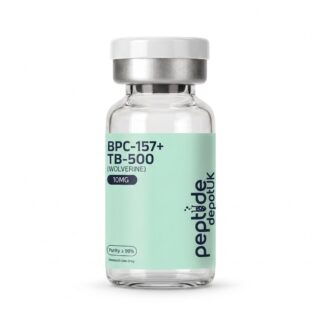
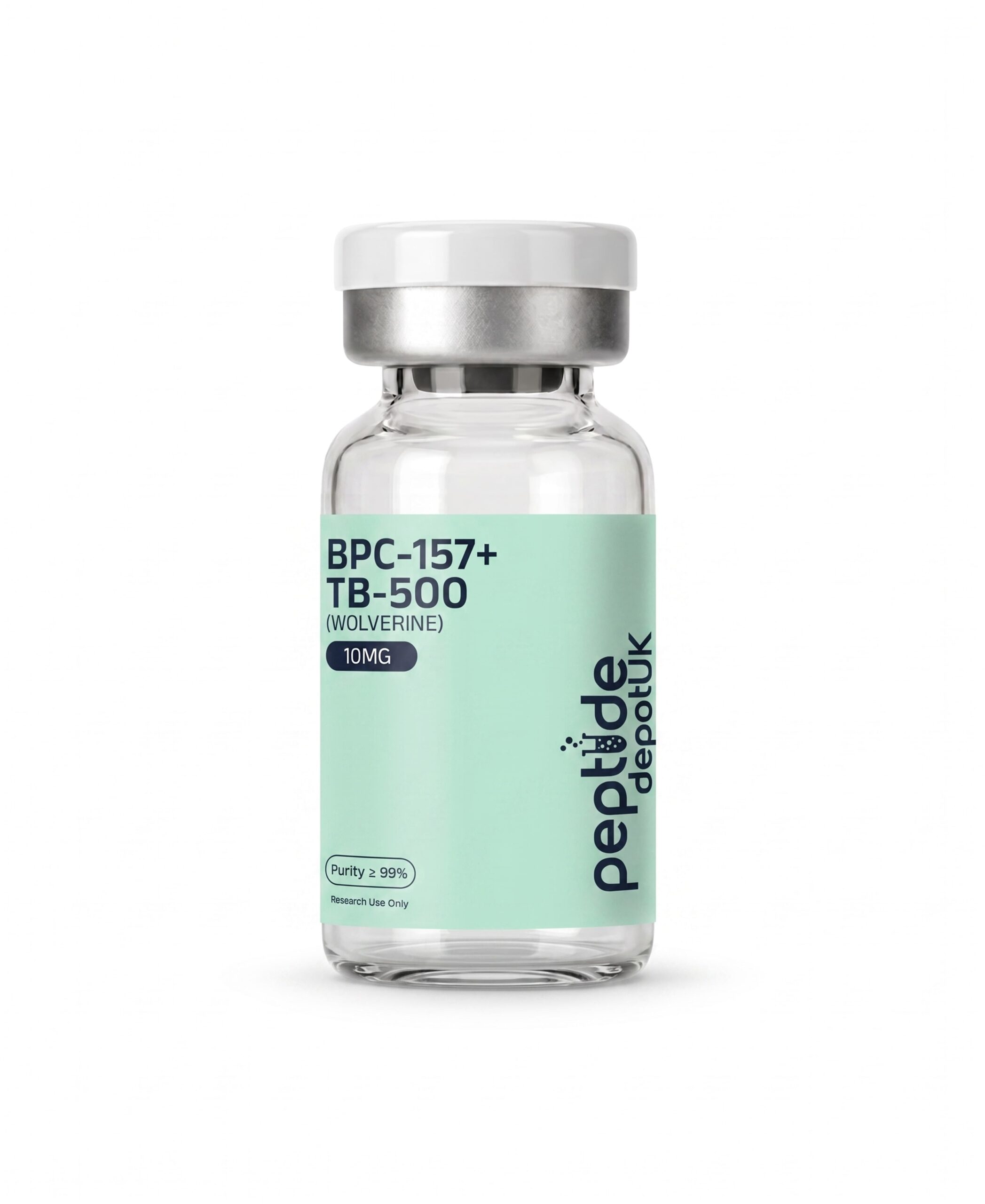
BPC-157 + TB-500
BPC-157 + TB-500 combines two peptides that, while mechanistically distinct, have been extensively studied in preclinical models for complementary effects on tissue repair, inflammation, and cellular recovery.
BPC-157 (Body Protection Compound-157)
- A synthetic 15-amino acid peptide derived from a protein found naturally in gastric juice, studied across a broad range of tissue injury models
- Research points to its role in stimulating new blood vessel formation, supporting collagen synthesis, and modulating inflammation through several distinct signalling pathways (Sikiric et al., 2025; Rodgers et al., 2025)
- Preclinical work has documented structural and functional recovery in tendon, ligament, muscle, and bone injury models, with no toxicity or adverse effects reported at the doses tested (Vasireddi et al., 2025)
TB-500 (Thymosin Beta-4 Fragment)
- A synthetic peptide matching the active actin-binding segment of Thymosin Beta-4, a protein present in nearly all mammalian cells
- Studies show it supports cell migration, angiogenesis, and reduced scarring, with preclinical models showing wound re-epithelialisation increased by as much as 61% over controls (Philp et al., 1999)
- Goldstein et al. (2012) describe it as a regenerative peptide with broad activity, demonstrating effects across skin, muscle, and connective tissue repair models
Why the combination is used in research
BPC-157 and TB-500 act on distinct but converging pathways, vascular repair, inflammation modulation, and structural tissue rebuilding, which is what makes the pairing relevant to researchers studying multi-pathway models of tissue recovery.
For research use only. Not intended for use in humans or animals.
References
Goldstein, A. L., Hannappel, E., Sosne, G., & Kleinman, H. K. (2012). https://pubmed.ncbi.nlm.nih.gov/22074294/
Ho, E. N., Kwok, W. H., Lau, M. Y., Wong, A. S., Wan, T. S., Lam, K. K., Schiff, P. J., & Stewart, B. D. (2012). https://pubmed.ncbi.nlm.nih.gov/23084823/
Philp, D., Badamchian, M., Scheremeta, B., Nguyen, M., Goldstein, A. L., & Kleinman, H. K. (1999). https://pubmed.ncbi.nlm.nih.gov/10469335/
Rodgers, K. E., Jamieson, S., Campeau, J. D., & Vinters, H. V. (2025). https://pmc.ncbi.nlm.nih.gov/articles/PMC12446177/
Sikiric, P., Drmic, D., Zucko, J., & Stupnisek, M. (2025). https://pubmed.ncbi.nlm.nih.gov/40005999/
Vasireddi, N., Hahamyan, H., Salata, M. J., Karns, M., Calcei, J. G., Voos, J. E., & Apostolakos, J. M. (2025). https://pmc.ncbi.nlm.nih.gov/articles/PMC12313605/