





Description
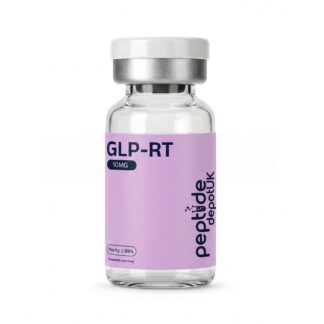
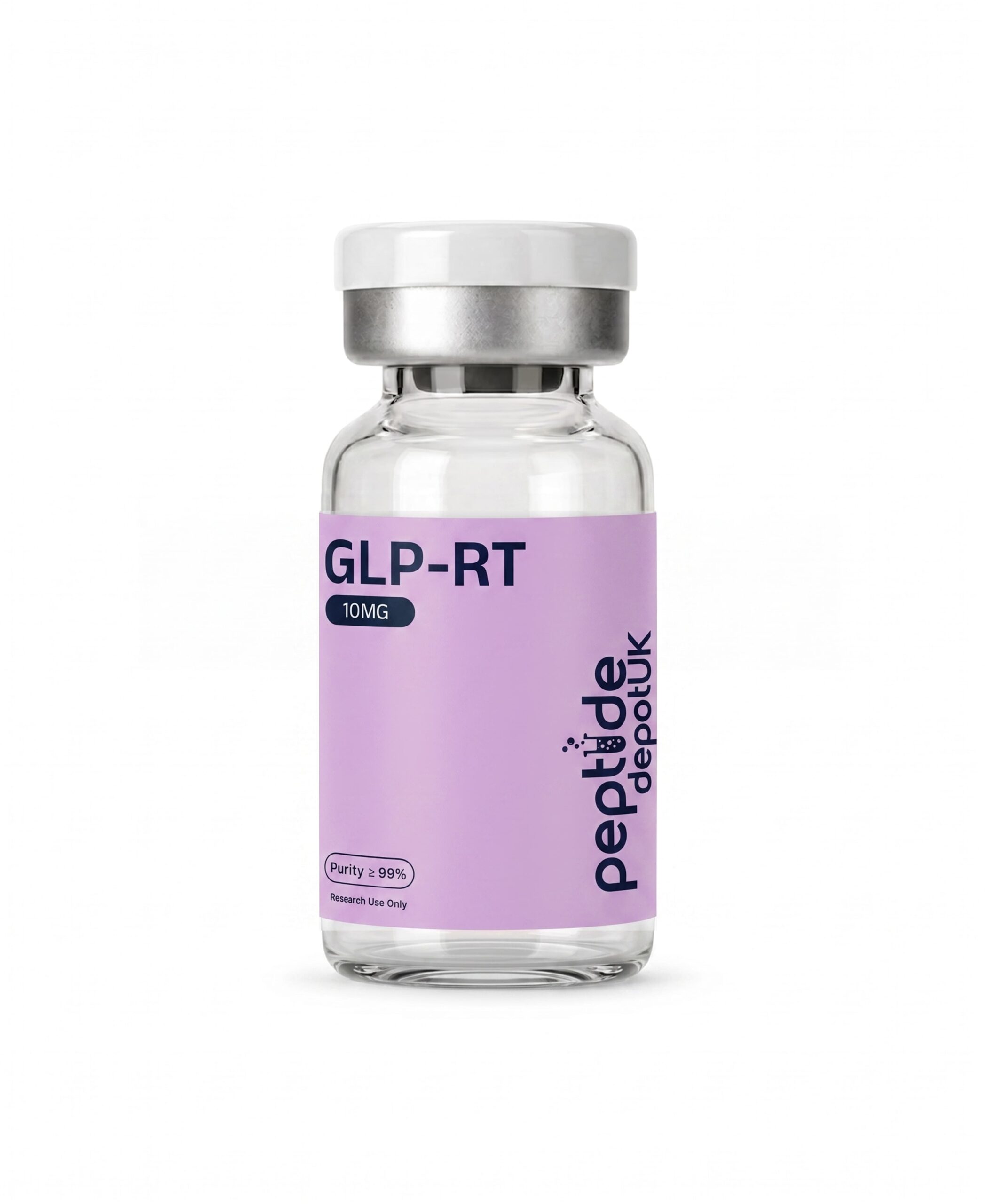
Three receptor pathways, one molecule. GLP-RT (LY3437943) was the first triple agonist of its kind to enter clinical trials, engaging GLP-1, GIP, and glucagon receptors in a single 39-amino acid peptide. Where tirzepatide combined two of these pathways, GLP-RT adds a third: glucagon receptor activation, which changes what the compound is capable of doing metabolically (Jastreboff et al., 2023).
Why the glucagon receptor matters
Most incretin-based compounds stop at GLP-1 and GIP, both of which influence insulin and appetite but leave energy expenditure largely untouched. Glucagon receptor activation is what closes that gap: it drives fat breakdown directly and increases how much energy the body burns. It also has a direct line to the liver specifically, an organ with dense glucagon receptor expression but essentially none for GLP-1 or GIP, positioning GLP-RT as a compound of interest for liver-focused metabolic research (Bhatt et al., 2024). A fatty diacid chain built into the molecule extends its half-life enough to support once-weekly dosing, with additional structural changes guarding against enzymatic breakdown (Nair et al., 2025).
What the trials showed
- Obesity (phase 2): the 12 mg group lost an average of 24.2% of body weight across 48 weeks, and crucially, the weight loss curve hadn’t plateaued by trial’s end. That figure outpaced both GLP-SM and GLP-TZ at matched timepoints (Jastreboff et al., 2023)
- Type 2 diabetes (phase 2): 82% of participants on the 12 mg dose brought HbA1c down to 6.5% or below within 36 weeks, with weight reductions running as high as 16.9% in the same group (Rosenstock et al., 2023)
- Liver disease (phase 2a): liver fat dropped by up to 82% in subjects with metabolic liver disease, results strong enough that phase 3 trials are now running concurrently across obesity, type 2 diabetes, and liver disease (Harrison et al., 2024)
For research use only. Not intended for use in humans or animals.
References
Harrison, S. A., Taub, R., Neff, G. W., Lucas, K. J., Labriola, D., Moussa, S. E., Younossi, Z. M., & Loomba, R. (2024). https://www.nature.com/articles/s41591-024-03018-2
Jastreboff, A. M., Kaplan, L. M., Frías, J. P., Wu, Q., Du, Y., Gurbuz, S., & Wadden, T. A. (2023). https://www.nejm.org/doi/full/10.1056/NEJMoa2301972
Nair, A., Rodrigues, A., & Fonseca, V. (2025). https://pmc.ncbi.nlm.nih.gov/articles/PMC12190491/
Rosenstock, J., Frias, J., Jastreboff, A. M., Du, Y., Lou, J., & Gurbuz, S. (2023). https://pubmed.ncbi.nlm.nih.gov/37385280/