
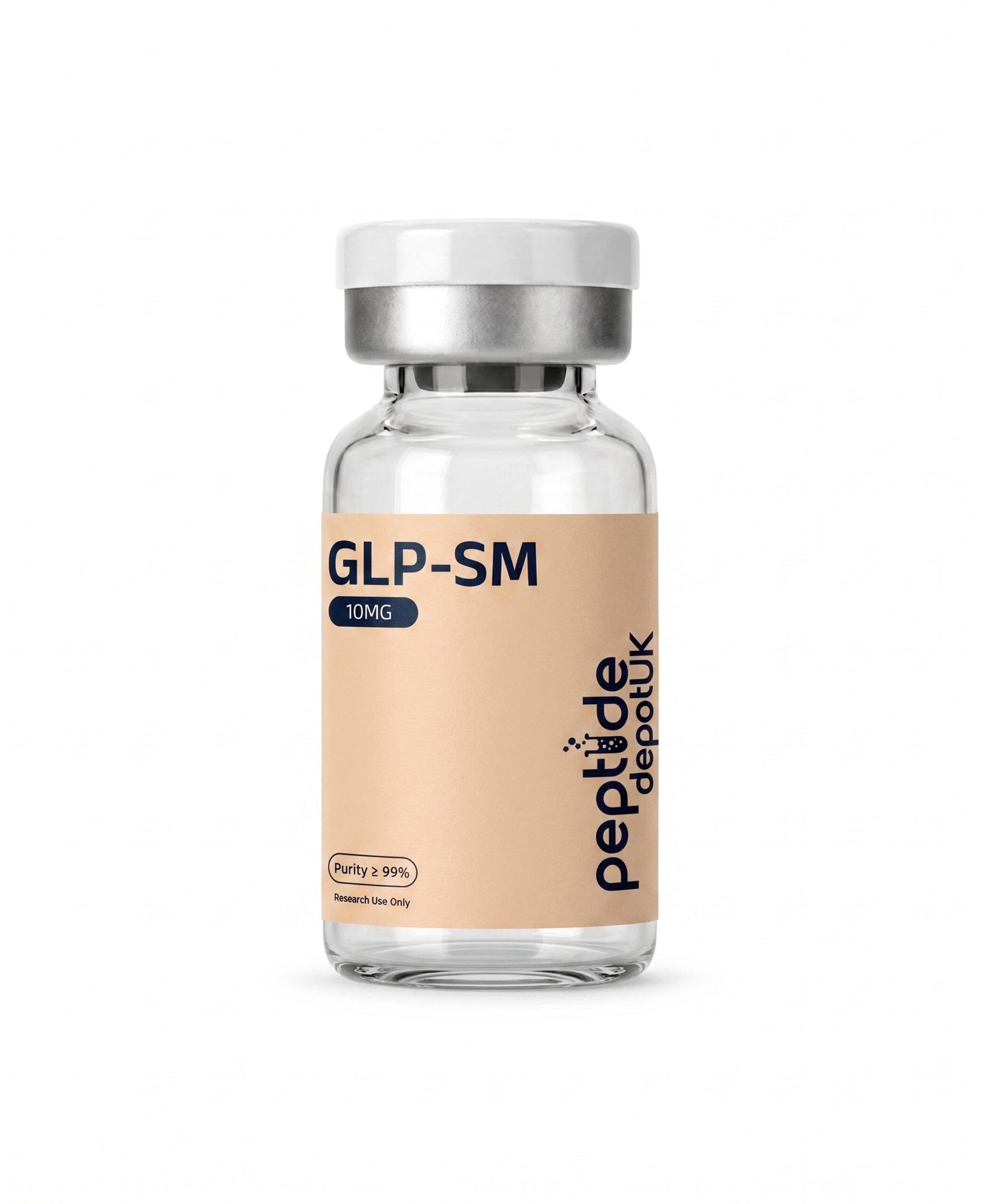









Description
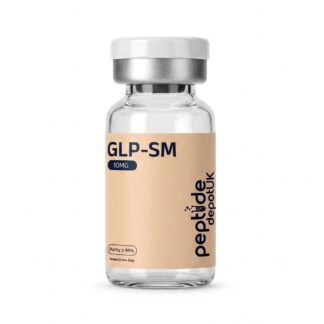
Semaglutide
GLP-SM is a synthetic, long-acting analogue of glucagon-like peptide-1 (GLP-1) — a hormone naturally released by the gut after eating. It was originally developed to study blood sugar regulation and has since become one of the most extensively researched peptides in metabolic science (Carvalho et al., 2025).
Mechanism of Action
- GLP-SM binds to and activates GLP-1 receptors found in the pancreas, brain, gut, and cardiovascular system, triggering insulin release in response to food while simultaneously reducing the release of glucagon — a hormone that raises blood sugar
- It slows the rate at which the stomach empties, which prolongs feelings of fullness and reduces overall food intake
- In the brain, GLP-1 receptor activation reduces appetite signals in areas responsible for hunger and reward, contributing to reduced caloric intake (Sikiric et al., 2025)
- GLP-SM is engineered with a fatty acid side chain that binds to albumin in the bloodstream, extending its half-life to approximately one week and enabling once-weekly dosing (Maharjan & Panda, 2022)
Key Research Findings
- The STEP clinical trial programme documented a mean body weight reduction of 14.9% with semaglutide 2.4 mg versus 2.4% with placebo in subjects without diabetes over 68 weeks (Carvalho et al., 2025)
- The SELECT cardiovascular outcomes trial found GLP-SM reduced major adverse cardiovascular events by 20% compared to placebo in subjects with established cardiovascular disease and overweight, but without diabetes (Lincoff et al., 2023)
- Research also demonstrates benefits in liver fat reduction, kidney function, and heart failure outcomes, pointing to a broad range of metabolic effects beyond blood sugar and weight (Trujillo et al., 2025)
For research use only. Not intended for use in humans or animals.
References
Carvalho, M., Figueiredo, R., & Costa, P. (2025). https://pubmed.ncbi.nlm.nih.gov/40143174/
Lincoff, A. M., Brown-Frandsen, K., Colhoun, H. M., Deanfield, J., Emerson, S. S., Esbjerg, S., & Nissen, S. E. (2023). https://www.nejm.org/doi/full/10.1056/NEJMoa2307563
Maharjan, R., & Panda, S. (2022). https://pmc.ncbi.nlm.nih.gov/articles/PMC8736331/
Sikiric, P., Drmic, D., Zucko, J., & Stupnisek, M. (2025). https://pmc.ncbi.nlm.nih.gov/articles/PMC11674233/
Trujillo, J. M., Nuffer, W., & Ellis, S. L. (2025). https://pmc.ncbi.nlm.nih.gov/articles/PMC12303005/